Posts

The Challenges of Deportation: Stories from the Border
Image
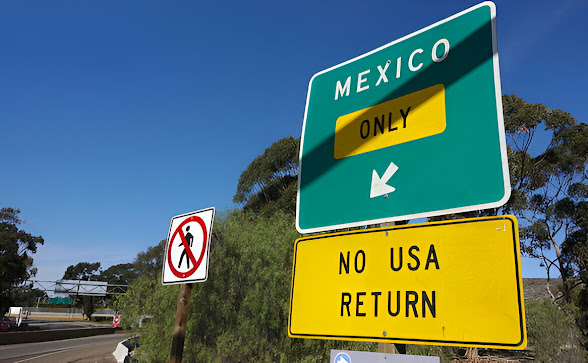
Deportation is a reality for many immigrants in the United States, often marked by profound emotional, social, and economic upheaval. Working in the field of immigration advocacy, I’ve witnessed how deportation affects individuals and families, not just legally but also emotionally and psychologically. The stories from the U.S.-Mexico border highlight the complexity and human cost of deportation. These accounts provide valuable insights into the challenges deportees face and the broader implications for society. Emotional and Psychological Impact of Deportation Deportation often brings a deep sense of loss and uncertainty for individuals and families. Many deportees experience severe emotional distress, including anxiety, depression, and trauma. The separation from loved ones and the abrupt transition to an unfamiliar or changed homeland amplify these feelings. For children, the impact can be even more profound. Being separated from a parent or guardian disrupts their sense of stabili...

Why Do Immigrants Come to the U.S.? Exploring Push and Pull Factors

Image
Immigration to the United States has long been shaped by a combination of challenges in home countries and the  opportunities that America offers. These motivations are commonly categorized as push factors, which compel  people to leave their homelands, and pull factors, which draw them to the U.S. As someone who has studied  migration trends extensively, I can tell you that understanding these factors is key to appreciating why millions of  people embark on this journey every year. This article explores these reasons in depth, shedding light on the social,  economic, and political dynamics that drive migration. Economic Push Factors: Escaping Hardship One of the most significant reasons people leave their home countries is economic hardship. In nations with  struggling economies, high unemployment rates and limited career prospects leave individuals with few options  to provide for themselves or their families. Many people from countries with weak or...

The Role of Immigration in Filling Labor Shortages

Image
  The U.S. labor market has been experiencing significant shortages across various industries, with more job openings than workers to fill them. Immigration has long played a critical role in addressing these labor gaps, particularly in sectors like healthcare, agriculture, construction, and technology. Immigrant workers are essential to the functioning of these industries, helping to maintain productivity and keep the economy running smoothly. In this article, I’ll explore how immigration helps fill these shortages, why it’s crucial for the future, and what steps can be taken to optimize immigration policies for labor needs. Labor Shortages Across Key Industries Labor shortages have been particularly severe in industries like healthcare, agriculture, and construction, all of which rely heavily on immigrant workers. For example, projections show that by 2036, the U.S. will face a shortage of 134,940 healthcare providers. Immigrants already play a critical role in this field, accou...

Marriage and Immigration: Legal Pathways for Couples Across Borders

Image
  Navigating the intersection of marriage and immigration can be complex and often overwhelming for couples living across borders. Whether you’re seeking to live in the U.S. with your spouse, get married abroad, or apply for a visa, understanding the legal processes involved is essential. In this article, I’ll explore the key legal pathways for couples navigating immigration, touching on spousal visas, adjustment of status, and special programs designed to help families stay together. Spousal Visas: The Foundation of Marriage-Based Immigration Spousal visas are among the most common ways couples secure legal residency for foreign-born spouses. For U.S. citizens or lawful permanent residents (green card holders), the first step is typically filing Form I-130, Petition for Alien Relative. This petition establishes the relationship between the U.S. citizen or green card holder and their spouse, allowing the non-citizen spouse to begin the process of applying for legal residency​. Ther...

Immigrants and Social Security: Eligibility Explained

Image
  Many immigrants wonder whether they are eligible for Social Security benefits in the United States, and if so, what steps they need to take. The good news is that noncitizens, under specific conditions, can qualify for Social Security benefits. However, eligibility requirements vary depending on factors like immigration status, work history, and international agreements. Let’s break down the key points to help clarify who can receive benefits and how immigrants can navigate the system. Basic Social Security Eligibility for Immigrants To qualify for Social Security benefits, immigrants must generally accumulate at least 40 work credits, which typically equates to about 10 years of work in the U.S. Immigrants who have legally worked and paid into the Social Security system during their time in the U.S. are entitled to the same benefits as U.S. citizens when they retire, become disabled, or in cases where they pass away and their dependents need to claim survivor benefits. If an im...

Fast-Track to Residency: Quickest Green Card Routes

Image
For many, obtaining a Green Card is a key step towards achieving the dream of living and working permanently in the United States. However, the process can be lengthy and complex, with wait times stretching into years depending on the specific pathway taken. Despite this, some routes to residency are notably faster than others. This article explores the quickest Green Card options, offering insights into how you can expedite your journey to becoming a permanent resident of the U.S. Family-Based Green Cards: A Fast-Track Through Immediate Relatives One of the most straightforward and quickest routes to a Green Card is through family sponsorship, particularly if you are an immediate relative of a U.S. citizen. Immediate relatives—spouses, unmarried children under 21, and parents of U.S. citizens—are not subject to annual visa caps, meaning there are no waiting periods for visa availability. Once the initial petition (Form I-130) is approved, the process can move quickly, especially if t...

The Other Side: Weighing the Disadvantages of a Green Card

Image
A Green Card, or Permanent Resident Card , allows an individual to live and work permanently in the United States. While the benefits of having a Green Card are well-known, including the ability to work freely in the U.S. and the potential path to citizenship, it is essential to consider the potential disadvantages. This article explores the less-discussed aspects of Green Card ownership, providing a comprehensive overview to help prospective applicants make informed decisions. Understanding both the advantages and drawbacks of holding a Green Card is crucial for making an informed decision about permanent residency in the United States. This guide aims to highlight the key disadvantages, offering a balanced view for those considering this significant step. By delving into various factors, we can better appreciate the complexities involved in holding a Green Card and its implications for long-term residency. Tax Obligations One of the significant drawbacks of obtaining a Green Card is ...